
The Mortgage Loan Process: From Application to Closing
- Nov 15, 2024
- 2 min read
Updated: Jul 14
The mortgage process is a sequence of borrower, property, and transaction reviews. Some steps overlap, and new conditions may appear as documents, insurance, appraisal, title, or property information is received.
Quick Takeaway: Stay responsive, keep finances stable, and ask questions early. A clear process does not eliminate underwriting requirements, but it makes responsibilities and next steps easier to understand.
1. Preparation and Preapproval
The borrower provides financial information and documents so a working range and possible loan direction can be reviewed. This is not final approval.
2. Property and Formal Application
After a property is selected, the lender receives the contract and property details, provides applicable disclosures, and updates the file for the specific transaction.
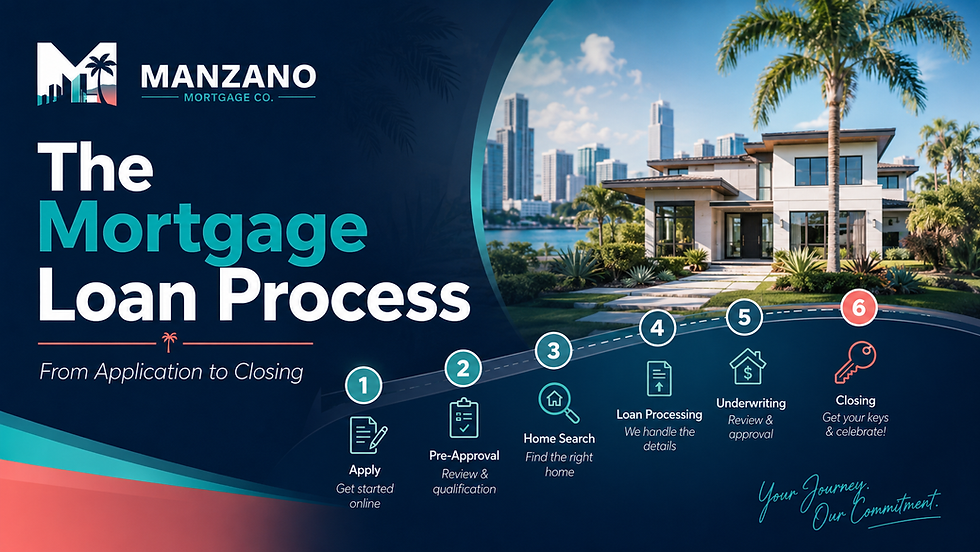
3. Processing and Verification
Income, employment, assets, debts, and credit are verified
Appraisal or valuation information is obtained when required
Insurance, title, association, and property documents are reviewed
4. Underwriting and Conditions
Underwriting evaluates whether the complete file meets the selected lender and program requirements. Conditions may request updated documents, clarification, repairs, insurance changes, or additional property information.
5. Final Review and Closing
Final approval, closing documents, funds, and timing must all be coordinated. Borrowers should review the Closing Disclosure, verify wiring instructions, and avoid financial changes through funding.
Important to Know: Timelines vary. No general article can promise a closing date or final result because each borrower, property, lender, and transaction is different.
Final Thoughts
An organized file and timely communication can reduce delays, but complete documentation and underwriting remain essential.
Manzano Mortgage Co. – Personalized Lending, Expert Guidance, Seamless Home Financing. Chris@ManzanoMTG.com | ManzanoMTG.com | 305-999-5664
This article is for general education and is not a loan approval, lending commitment, rate quote, financial advice, or legal advice.


Comments